
Why We Built a Field Guide for Home Solar Installs
SunStage Atlas exists because the gap between signing and handover is where most homeowners lose track of the process.
We are not on your roof and we do not sell equipment. We sit with the paperwork, photos, and timelines that people bring us and turn them into stage-by-stage notes anyone can follow — from the first survey sketch to the quiet weeks when the meter has not moved yet.

How SunStage Atlas Started
The project grew out of repeated questions that all sounded like: "They said install was next week — so why is nothing happening?"
Early conversations came from neighbors who had already signed contract paperwork and received a polished layout, yet could not explain what would happen between permit submission and the first rail on the roof. One family in suburban Denver waited six weeks without knowing whether the delay was the city, the utility, or their contractor. Another in North Carolina assumed the system was live because panels were visible from the street, only to learn the interconnect application was still pending.
Those stories shared a pattern: people were making decisions without a map of the stages. Initial contractor conversations covered equipment and timelines in broad strokes, but nobody walked them through inspection order, handover documents, or what "commissioning" meant in plain language. We started taking notes during phone calls — which office to call, which form number appeared on the permit sticker, which photo angles helped when disputing a layout change.
SunStage Atlas became the place where those notes live publicly. We chose home solar install stages as the sole focus because the steps repeat across regions even when names differ: survey, stamped plan, roof work, electrical rough-in, authority inspection, utility approval, owner handover. General "renewable energy" content did not help the person staring at a garage wall wondering where the inverter would hang.
The name reflects that focus — each install moves through distinct stages, and homeowners deserve an atlas they can open at any point. We publish what we learn from walkthroughs and reader inquiries, always separating what we observe from what a licensed crew must decide on site. That boundary keeps the project honest and useful.
Our Editorial Approach
Every guide passes through the same checks before it reaches the site — no anonymous tips, no recycled press releases.
- Source interviews
- We talk to homeowners who volunteer their timelines and redact personal identifiers. When a permit date or inspection outcome is cited, it comes from a document the owner shared — not from a forum post we cannot verify. If only one data point exists, we say so instead of presenting it as a rule.
- Plan review
- Layout drawings, single-line diagrams, and handover folders are compared line by line against what our checklists expect. We note missing fire setbacks, unmarked conduit paths, and inverter locations that contradict the garage walkthrough photos. We do not rank brands or recommend specific hardware.
- Regional context
- Permit offices and utilities use different forms, but the sequence — build, inspect, interconnect — repeats. We describe both the universal stage and the local label when a contributor names their jurisdiction. Readers are always pointed to official sources for tariff and code language that changes year to year.
- Plain-language edit
- Drafts are stripped of promotional vocabulary and undefined acronyms. If a term like "rapid shutdown" appears, the sentence explains what the homeowner will see on the wall, not only the code reference. The final read checks that we never imply we perform licensed work or state specific timelines.
How a Written Inquiry Moves Through Our Desk
When you write to us, we treat your message as a stage diagnosis — not a contractor referral.
-
You describe where the project stalled
The contact form asks which phase applies: pre-permit, waiting on inspection, post-roof but pre-utility, or first weeks after handover. Specific details help — permit number format, which crew last visited, whether the inverter is mounted but unpowered. We do not need serial numbers or account passwords.
If your situation is earlier than survey, we still respond with what to request before signing, but our deepest notes begin once a layout exists on paper.
-
We map your notes to a stage checklist
Internally we align your description with the ten stages we track publicly. Gaps become questions back to you: "Did the city sticker the disconnect?" or "Is there an as-built reflecting the row change after the dormer?" This step stays on paper and email — there is no dashboard or upload portal on the site.
-
We reply with documents and next questions
Responses cite published guides where they apply and list missing items you can request from your contractor or utility. We may suggest photos to take before the next visit — conduit entry, label on the production meter, inspection tag color — so you have evidence if the story changes later.
-
Follow-up stays optional and bounded
Some owners send one update when the utility letter arrives; others close the loop after handover. We do not maintain ongoing case management or monitor your monitoring app. When a pattern appears in multiple requests, it may inform a future article after identities are removed.
We explain the path. Licensed professionals walk it on your property.
Where Our Guidance Ends
SunStage Atlas does not dispatch installers, sell panels or inverters, or negotiate contracts on your behalf. We will not tell you which contractor to hire or certify that a roof can carry a specific array — that requires a structural evaluation by a qualified engineer or the installer's licensed designer.
Grid interconnection, breaker sizing, and work inside your main panel belong to licensed electricians and the utility's rules. We describe what those steps usually look like so you know which document to ask for, but we do not provide wiring instructions or tariff advice. Incentive and net-metering programs change; we link you to the habit of checking official state and utility pages rather than copying numbers that expire.
If monitoring data looks wrong, we help you distinguish normal seasonal variation from a likely commissioning issue — then point you to the warranty and interconnect contacts on your handover sheet. Climbing the roof, opening energized equipment, or altering mounts yourself is outside our scope and outside what we recommend.
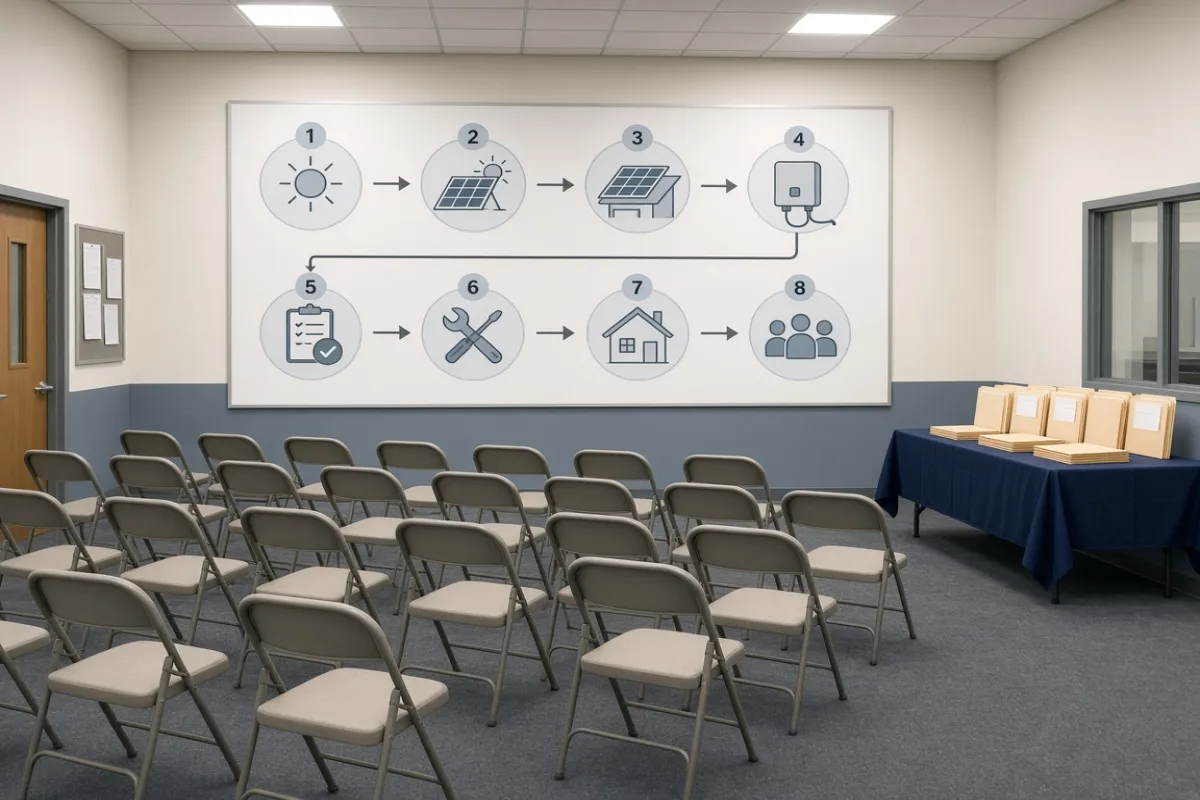
Workshops and Reference Partners
We occasionally co-host evening sessions with local organizations that already serve homeowners — library lecture series, county energy offices, and nonprofit housing counselors. Partners are chosen when their audience needs process clarity rather than equipment pitches. We verify that no sponsor sells turnkey installs from the same room.
Fictional examples of the types we accept: a regional "Home Energy Literacy" nonprofit that prints our stage checklist in their welcome packet; a municipal sustainability desk that links to our handover article from their permit FAQ; a community college continuing-ed program that uses our survey-plan guide in a non-credit weekend seminar. We decline booths at retail solar fairs and any venue that requires brand comparisons on stage.
- Front Range Home Energy Literacy Coalition — quarterly library talks in Aurora, Colorado
- Tri-County Permit Navigator Desk — links to our paperwork section from their solar permit checklist
- Meridian Community College Continuing Ed — non-credit "Reading Your Solar Plan Set" weekend module
Tell Us Which Stage Your Home Is In
Send a short note about your permit status, last crew visit, or missing handover papers. We will reply with the checkpoints that matter for that point in the timeline.
Contact UsRead the Stage Guides
Browse articles organized by survey, install day, inspection, and handover — each focused on one document or one visit.
View All ArticlesImportant Information About This Site
The materials on SunStage Atlas are provided for informational and educational purposes. They explain how home solar panel installation typically unfolds and help you prepare questions for licensed professionals working on your property. Content here is not a substitute for on-site evaluation by qualified installers, electricians, or structural engineers.
SunStage Atlas is not a solar installation company. We do not dispatch crews to mount panels, schedule install dates, or prepare cost estimates for your roof. We are not a retail seller of panels, inverters, batteries, or related hardware, and we do not compare brands or models. Nothing on this site should be read as financial advice, performance forecasts, or claims about future utility bills or energy output.
Utility interconnection rules, tariff structures, and incentive programs change by state and service territory. Verify current requirements directly with your utility provider and local permitting office. Grid tie-in, work inside your electrical panel, and assessment of roof load capacity must be performed by appropriately licensed specialists in your jurisdiction.
Every home and crew operates differently. Permit review times, inspection sequences, and handover documents vary, so timelines described on other projects may not match yours. You are responsible for decisions about system sizing, contractor selection, and how you use the information presented here. SunStage Atlas accepts no liability for outcomes based on self-directed choices made without professional guidance.